

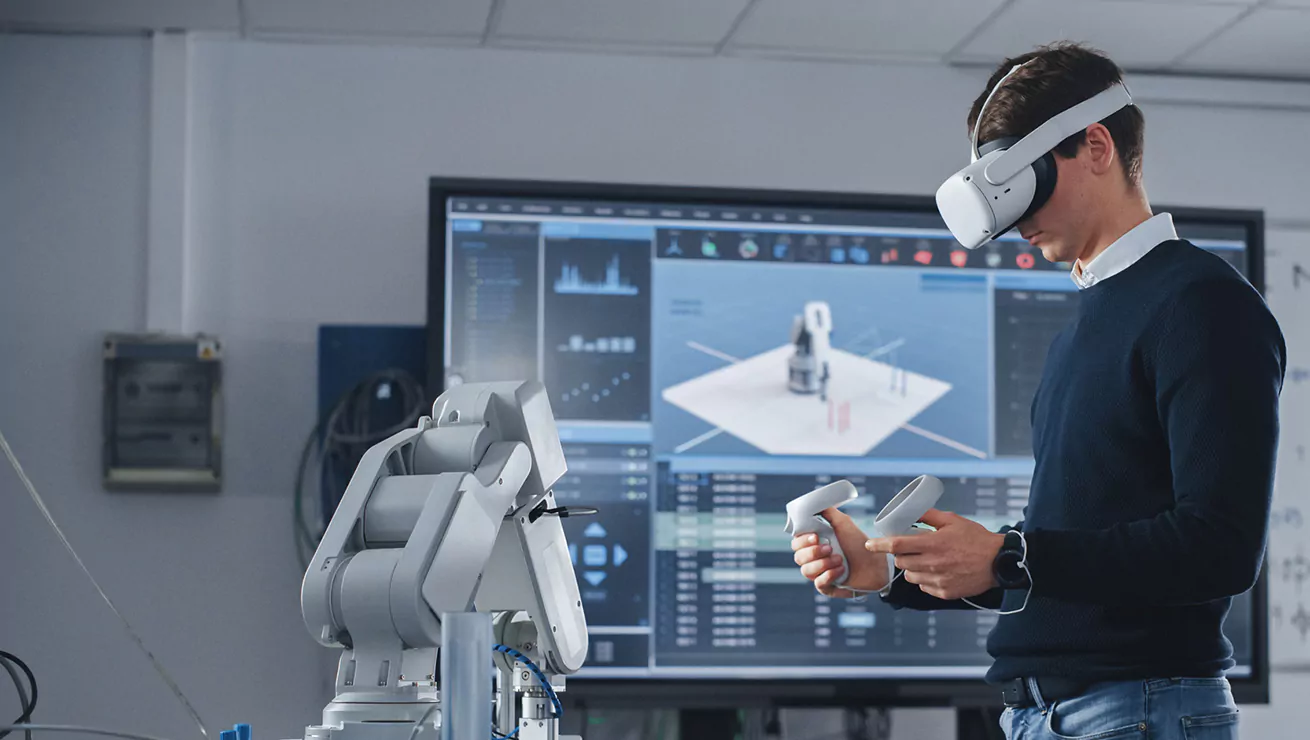
Training has always been about preparation, but the way people prepare is changing rapidly. Traditional methods—manuals, lectures, and limited hands-on sessions—are no longer enough in environments where precision, speed, and confidence are critical. Virtual reality training solutions are stepping in to bridge that gap, offering immersive experiences that allow individuals to learn by doing rather than simply observing.
At the centre of virtual reality training solutions is immersion. By placing users inside a fully simulated environment, VR removes distractions and creates a sense of presence that closely mirrors real-world conditions. Whether it’s a factory floor, a medical setting, or a high-pressure emergency scenario, trainees can interact with their surroundings as if they were physically there. This level of engagement helps reinforce learning in a way that traditional approaches often struggle to achieve.
One of the most compelling advantages of VR training is the ability to practise without risk. In many industries, mistakes can be costly or dangerous, making real-world training difficult to scale. Virtual environments allow individuals to experiment, make decisions, and learn from errors without real consequences. This not only improves confidence but also encourages deeper understanding, as trainees can explore different approaches and see how outcomes change.
Realism plays a crucial role in the effectiveness of these solutions. Advances in graphics, motion tracking, and sound design have made virtual environments increasingly lifelike. This realism helps users develop not just technical skills, but also situational awareness and decision-making abilities. By experiencing scenarios that feel authentic, trainees are better prepared to respond effectively when faced with similar situations in reality.
Another key strength of virtual reality training solutions is adaptability. Training programmes can be customised to suit different roles, skill levels, and objectives. A beginner might focus on foundational tasks, while an experienced professional can be challenged with complex scenarios that test their expertise. This flexibility ensures that training remains relevant and continues to provide value as individuals progress.
Collaboration is also enhanced through VR. Many platforms allow multiple users to participate in the same simulation, even if they are in different locations. This makes it possible for teams to train together, improving communication and coordination. In fields where teamwork is essential, such as emergency response or industrial operations, this capability can have a significant impact on overall performance.
Data and feedback are integral to the process. Virtual reality systems can capture detailed information about how users interact with the environment, including their decisions, response times, and overall performance. This data provides valuable insights for trainers, enabling them to identify strengths and areas for improvement. Immediate feedback allows trainees to learn from each session, accelerating the development of skills.
Accessibility is another factor driving the adoption of VR training solutions. As technology becomes more affordable and portable, organisations are finding it easier to implement VR programmes without extensive infrastructure. This opens up opportunities for a wider range of industries and organisations to benefit from immersive training, from large corporations to smaller teams.
Despite these advantages, virtual reality training is most effective when integrated with other learning methods. Practical experience, mentorship, and theoretical knowledge all remain important. VR acts as a powerful complement, providing a safe and engaging environment where skills can be practised and refined before being applied in real-world situations.
Looking ahead, the potential of virtual reality training solutions continues to expand. Advances in artificial intelligence and real-time data integration are expected to make simulations more dynamic and responsive, creating personalised learning experiences that adapt to each user. This will further enhance the effectiveness of training, making it more closely aligned with the challenges individuals face in their roles.
As industries become more complex and the demand for skilled professionals grows, the need for effective training solutions will only increase. Virtual reality offers a compelling answer, transforming learning into an interactive and immersive experience. By combining realism, flexibility, and data-driven insights, virtual reality training solutions are setting a new standard for how people develop the skills they need to succeed.